LMS
LMS
Last updated on 20th May 2026| 11250

- Introduction SAP FICO Basics
- Understanding the SAP FICO Module Split
- The Organizational Structure in FICO
- General Ledger Accounting Concepts
- Accounts Payable and Receivable
- Cost Center and Profit Center Accounting
- The Integration Points of FICO
- Document Entry and Posting Rules
- Conclusion
Introduction SAP FICO Basics
Breaking into the SAP ecosystem as a fresher usually means choosing a specific functional module, and SAP FICO is widely considered the most prestigious and highest-paying choice. FICO stands for Financial Accounting and Controlling, representing the two critical pillars of corporate finance. Every single transaction that happens in a company, whether it is buying raw materials or selling a finished product, eventually flows into the FICO module to be recorded. Because it deals directly with a company’s money, it requires a high level of accuracy and a solid understanding of standard accounting principles. Many freshers with an engineering background try to jump into FICO without knowing the difference between a debit and a credit, which is a massive mistake. You cannot configure the software if you do not understand the real-world financial process it is trying to automate and join SAP FICO Training. Learning FICO is not about memorizing transaction codes; it is about understanding how a business records its daily financial events. Mastering these foundational concepts guarantees you a highly secure career because every business on earth needs to track its finances. Staying proactive with accounting basics ensures stronger preparation, and focusing on accuracy builds credibility. Over time, this mastery positions you as a fresher who can confidently explore SAP FICO.
Understanding the SAP FICO Module Split
To learn FICO effectively, you must understand that it is actually two completely separate modules packaged together. FI stands for Financial Accounting, which focuses on external reporting. This is the module that generates the official balance sheets and profit-and-loss statements that a company shows to outside stakeholders like investors, banks, and government tax authorities. The rules here are strictly regulated by local laws to ensure compliance. On the other hand, CO stands for Controlling, which focuses entirely on internal management reporting in SAP FICO Training. This module is used by internal managers to track costs, analyze profitability, and make operational decisions. The data here is kept strictly confidential from the outside world. While FI looks at the company as a single legal entity, CO breaks the company down into internal cost centers to see exactly which specific department or product line is losing money. Understanding this clear boundary between external legal reporting and internal management reporting is the first mental hurdle a fresher must cross to truly grasp how SAP handles enterprise finance. Staying consistent with FI and CO practice ensures stronger preparation, and focusing on reporting boundaries builds credibility. Over time, this mastery positions you as a fresher who can confidently manage SAP FICO processes.
Ready to Get Certified in SAP BASIS ? Explore the Program Now SAP BASIS Training Offered By ACTE Right Now!
The Organizational Structure in FICO
- The Company Code: The company code is the central organizational unit in the FI module. It represents a separate legal entity for which independent financial statements are created. A massive global corporation might have fifty different company codes to represent different subsidiaries in different countries.
- The Chart of Accounts: Before you can record any money, you need a list of all the accounts you will use. The chart of accounts is the master list of every general ledger account, like cash, revenue, or rent expense, that a company uses across all its company codes.
- The Fiscal Year Variant: Companies do not all operate on a standard calendar year. Some have fiscal years that start in April or July. and know the Future Scope Of SAP career For Freshers The fiscal year variant defines the posting periods, meaning it strictly controls which months are open for entering financial data and which are closed.
- Controlling Area: In the CO module, the controlling area is the highest organizational unit. It handles cost accounting. Unlike company codes, a single controlling area can stretch across multiple company codes, allowing a company to do internal cost reporting across its global subsidiaries.
- Operating Concern: This is the highest level of organizational structure used specifically for profitability analysis. It allows companies to analyze their profit margins based on specific market segments, product lines, or customer groups, feeding directly from both FI and CO data.

General Ledger Accounting Concepts
The General Ledger, or GL, is the absolute core of the FI module and acts as the central repository for all financial data. In older manual accounting systems, a company might have a separate ledger for cash, a separate book for sales, and another for expenses. SAP consolidates all of these into one single digital general ledger and know about SAP functional Vs Technical Modules. Every time a transaction occurs, it is recorded as a journal entry in the GL using the double-entry bookkeeping method, meaning every debit must have an equal and opposite credit. As a fresher, you must understand how to configure GL accounts. You have to define whether an account is a balance sheet account that carries a balance forward at year-end, or a profit-and-loss account that resets to zero.
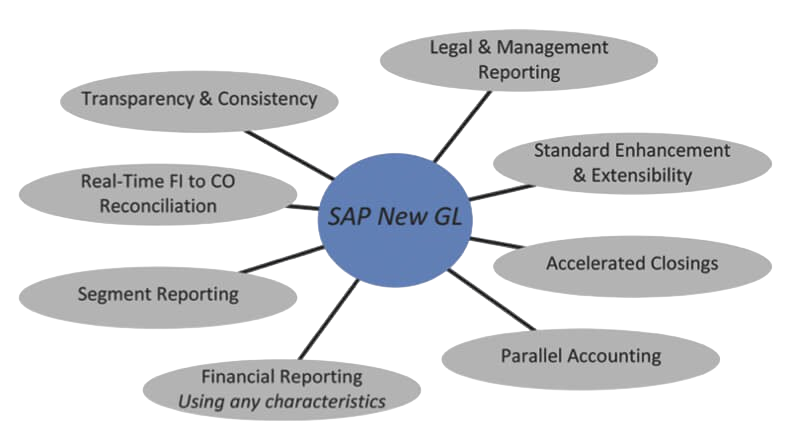
You also need to understand account groups, which control what fields appear on the screen when a user creates a new master record. Mastering the GL is mandatory because every other sub-module in SAP eventually posts its financial impact directly to these GL accounts for Best SAP Certification for beginners. Staying consistent with GL practice ensures stronger preparation, and focusing on configuration builds credibility. Over time, this mastery positions you as a fresher who can confidently manage SAP FI processes.
Excited to Obtaining Your SAP BASIS Certificate? View The SAP FICO Training Offered By ACTE Right Now!
Accounts Payable and Receivable
Accounts Payable, or AP, and Accounts Receivable, or AR, are sub-ledgers that feed directly into the General Ledger. AP manages the money the company owes to its external vendors for goods or services purchased. When a company receives an invoice from a supplier, it is entered into the AP module, creating a liability. AR manages the exact opposite; it tracks the money that customers owe the company for products shipped. When a sales invoice is generated, it sits in AR as an asset until the customer pays and SAP S4 Hana explained for beginners. As a fresher, you need to understand the concept of reconciliation. At the end of the month, the total of all vendor balances in AP must perfectly match the total AP balance shown in the General Ledger. In SAP, this reconciliation happens automatically because AP and AR are actually just special views of the General Ledger. Learning how to configure vendor and customer master records, process incoming and outgoing payments, and manage clearing accounts is the daily bread and butter of a junior FICO consultant. Staying proactive with AP and AR practice ensures stronger opportunities, and focusing on reconciliation builds credibility. Over time, this mastery positions you as a fresher who can confidently handle SAP FICO sub-ledgers.
Cost Center and Profit Center Accounting
- Profit Center Accounting Centers: A cost center is a specific location or department within a company that incurs costs but does not directly generate revenue as a Fresher know how long does it take to learn SAP for freshers. Examples include the HR department, the IT helpdesk, or a specific factory floor. Cost center accounting tracks exactly how much money these departments are spending.
- Allocating Overhead Costs: One of the main jobs of a CO consultant is configuring how expenses flow between cost centers. If the IT department provides support to the sales department, a portion of the IT costs should be allocated to the sales cost center to show the true cost of running the sales team.
- Understanding Profit Centers: While cost centers only track expenses, profit centers track both revenues and expenses. A product line or a specific regional sales office is usually set up as a profit center so management can see exactly how much profit that specific segment is generating.
- The Standard Hierarchy: Profit Center Accounting cost centers must be organized into a strict standard hierarchy. This tree-like structure ensures that every single cost in the company rolls up to a highest-level node, usually representing the entire company, allowing for clean, structured reporting.
- Integration with Profit Center Accounting FI: When a user posts an expense in the FI module, they must enter a cost center and know best SAP courses for freshers . This single action automatically creates a parallel entry in the CO module, keeping the financial and managerial accounting perfectly synchronized without any manual data entry.
Are You Considering Pursuing a Gen AI Master’s Degree? Enroll For SAP FICO Expert Masters Program Training Course Today!
The Integration Points of FICO
Understanding how FICO integrates with other SAP modules is what separates an average consultant from a great one. FICO does not operate in a vacuum; it is the final destination for every other module in the system. When a user in the Materials Management module receives a shipment of raw materials from a vendor, MM automatically generates a financial document in FI to record the inventory asset and the liability to the vendor thats why Top companies hiring SAP freshers . When the Sales and Distribution module ships a product to a customer, SD automatically generates an invoice in FI to record the revenue and the customer’s debt.
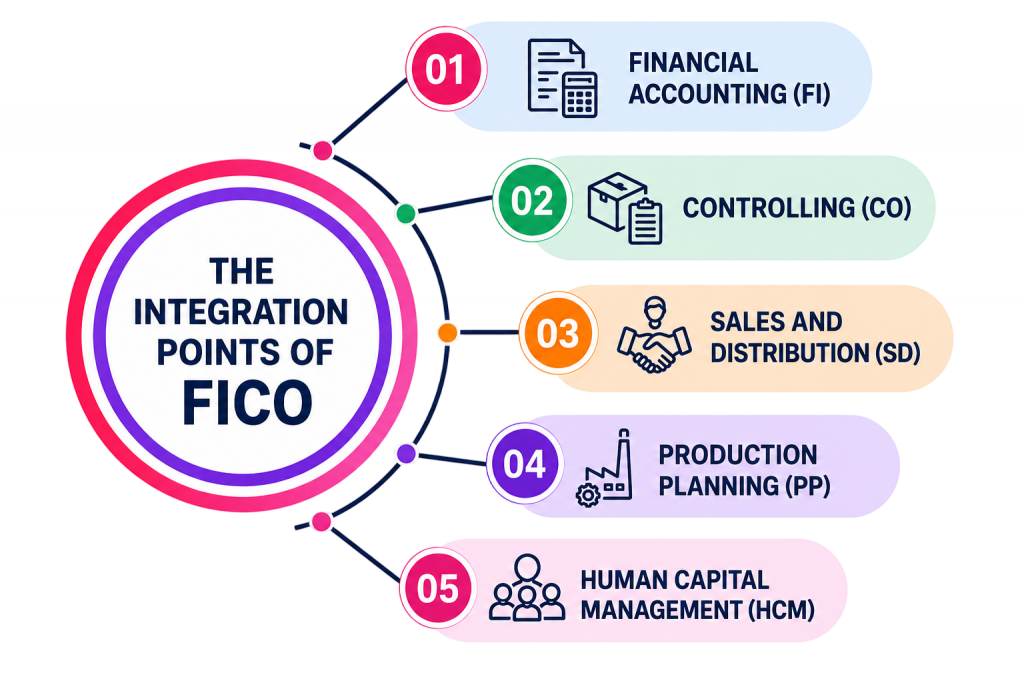
If a human resources module runs the monthly payroll, it posts the salary expenses directly into FI. As a fresher, you do not need to know how to configure MM or SD, but you absolutely must know the automatic account determination logic. This is the configuration that tells the system which specific GL account to hit when a specific movement happens in MM or SD as frsher How to build a strong resume for SAP freshers. Mastering integration is the key to solving complex accounting discrepancies. Staying proactive with integration ensures stronger opportunities, and focusing on account determination builds credibility. Over time, this mastery positions you as a fresher who can confidently manage SAP FICO integrations.
Set to Ace Your SAP BASIS Job Interview? Check Out Our Blog on SAP FICO Interview Questions & Answer
Document Entry and Posting Rules
Every financial transaction in SAP is saved as a document, and understanding the anatomy of this document is a non-negotiable skill for freshers. An SAP document consists of a document header, which contains the posting date and the company code, and line items, which contain the specific account numbers, debit and credit amounts, and cost centers. SAP FICO Training has strict posting rules that prevent users from making illegal entries. For example, the system will absolutely block a posting if the total debits do not perfectly equal the total credits. It will also block postings if you try to post to a period that has been closed by the finance team. You must understand the concept of clearing accounts, which are temporary holding accounts used when a transaction is not yet complete, like a payment made to a vendor before the exact invoice is received. Learning how to navigate the document entry screens, display line items, and reverse incorrect entries is the most practical, hands-on skill you will use on your very first day as a FICO consultant. Staying consistent with posting practice ensures stronger preparation, and focusing on clearing accounts builds credibility. Over time, this mastery positions you as a fresher who can confidently handle SAP FICO document processes.
Conclusion
Mastering SAP FICO basics as a fresher requires you to bridge the gap between traditional accounting theory and modern enterprise software. You cannot simply learn the configuration steps; you must deeply understand the underlying financial logic that makes those steps necessary. From defining the organizational structure and mapping the chart of accounts to configuring automatic account determination for integrated modules, every piece of the FICO puzzle serves a specific legal or managerial purpose in SAP FICO Training. Do not let the sheer volume of transaction codes intimidate you. Focus entirely on the business processes. Understand exactly how a vendor invoice flows through Accounts Payable, how costs are allocated to Cost Centers, and how a sales document in SD impacts the General Ledger. By building this strong conceptual foundation, you make yourself incredibly valuable to implementation teams. Companies will always pay a premium for FICO consultants who understand both the software and the finance behind it, ensuring your long-term career growth and stability in the SAP ecosystem. Staying disciplined with finance concepts ensures stronger opportunities, and focusing on process clarity builds credibility. Over time, this strategy positions you as a fresher who can confidently thrive in SAP FICO consulting.